Cours Informatique
Seniors 17
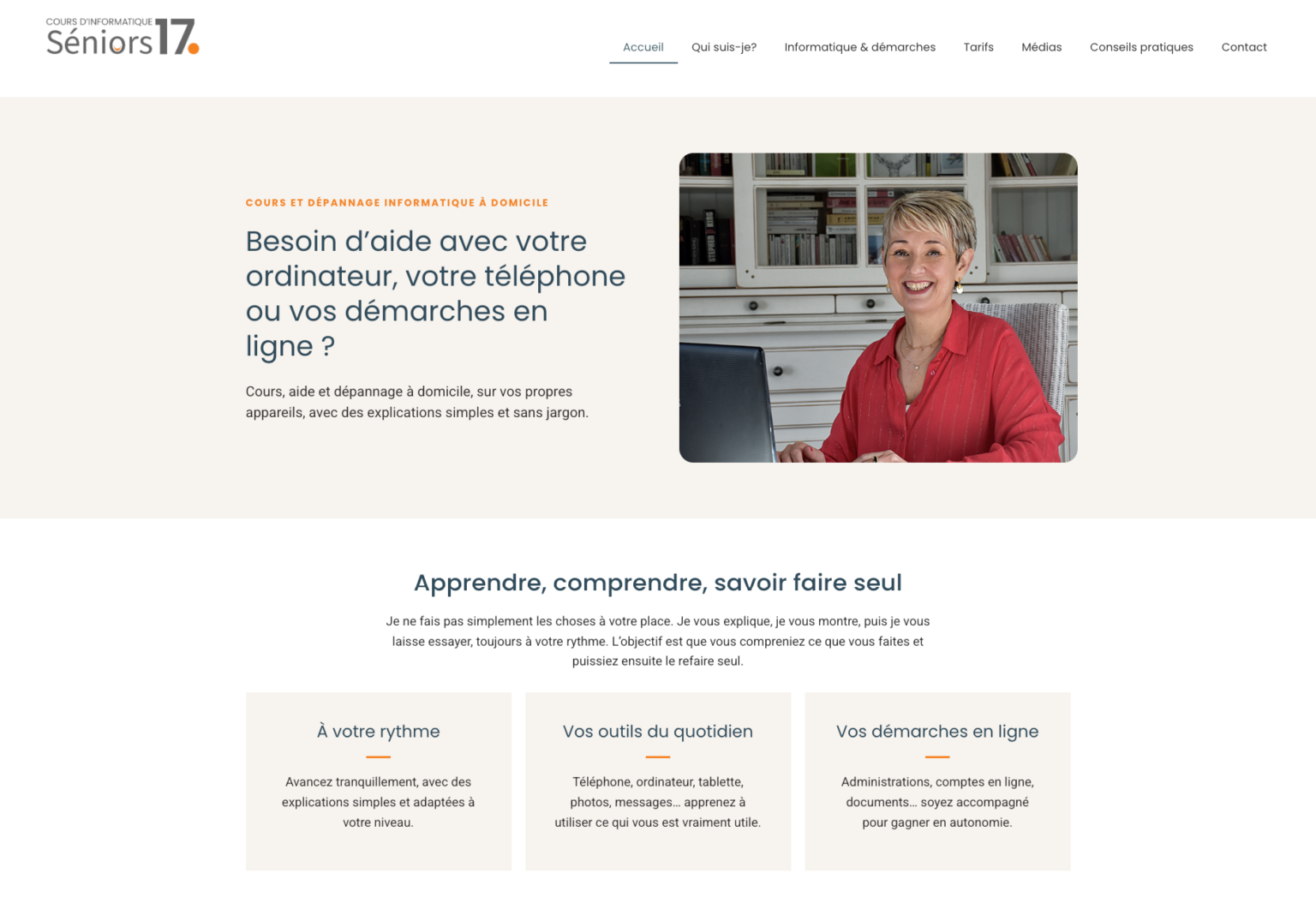
Starting with what people actually need
Understanding why people actually come to Isabelle was the starting point: people don’t generally wake up thinking they need a computer lesson. They want to video call their grandchildren, send photographs, manage something online, use a new phone or stop having to ask someone else for help.
The technology is secondary. What matters is what someone wants to be able to do, what is getting in the way and how confident they feel doing it.
The website was therefore built around real situations and needs, rather than expecting visitors to translate their problem into a computer subject or course.
Trust is part of the service
Isabelle’s personality is an important part of what she offers. Patience, warmth and bienveillance matter when someone feels uncomfortable with technology or embarrassed about needing help.
Rather than saying “I am patient, reassuring and bienveillante”, the website allows those qualities to come through naturally in the language, imagery and way it communicates.
Designing for confidence
Everything on the site needed to feel approachable without being patronising. This is an older audience, not an incapable one.
The content, design, imagery and navigation were considered together: clear enough to remove unnecessary difficulty, while still feeling contemporary and giving visitors the information they need to make their own decisions.
Accessibility mattered, but so did dignity. Designing for an older audience doesn’t mean making everything enormous, stripping away personality or assuming people can’t use a website.
What happened after launch
What I learned
Working on this project challenged some of my own assumptions about older people and technology. “Seniors” describes an age group, not a level of ability. Some of Isabelle’s clients need help learning the basics; others are perfectly comfortable with technology until something changes, stops working or suddenly has to be done online.
I also came to understand how much confidence matters. Being afraid of clicking the wrong thing can be as much of a barrier as not knowing where to click in the first place.